Geo-Lock400

General Information

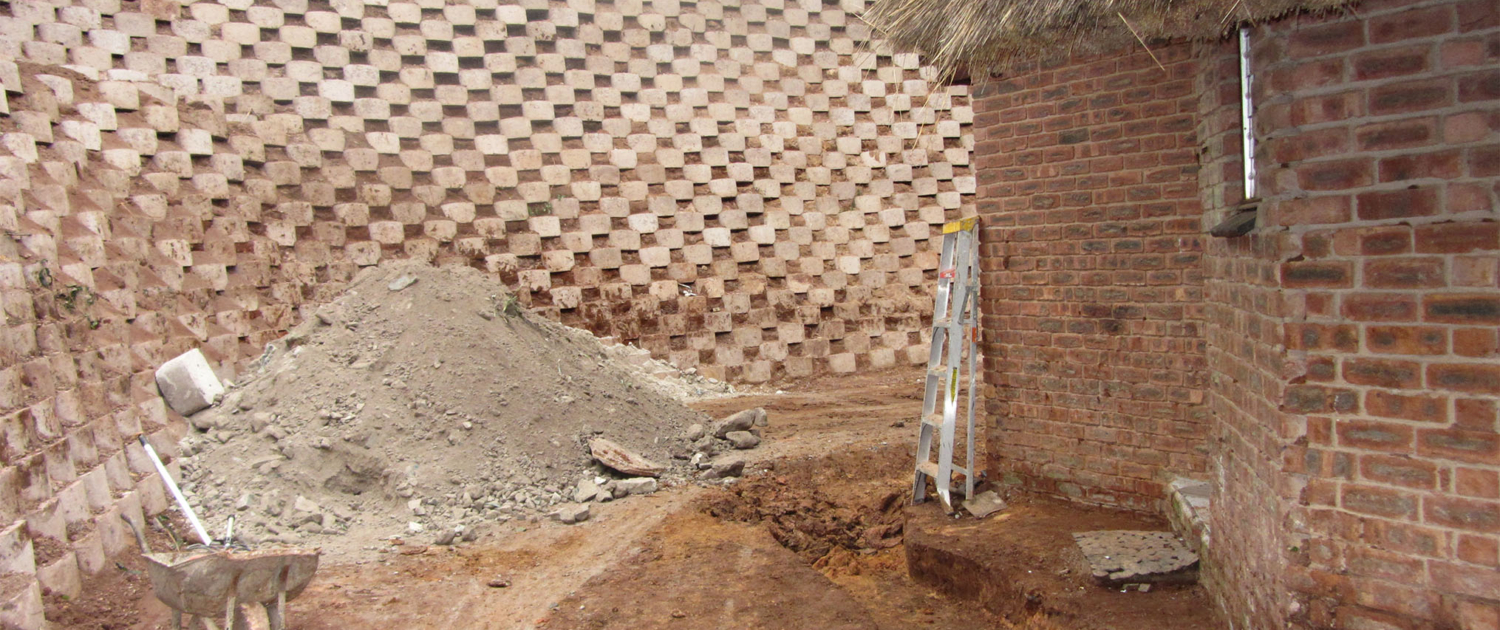
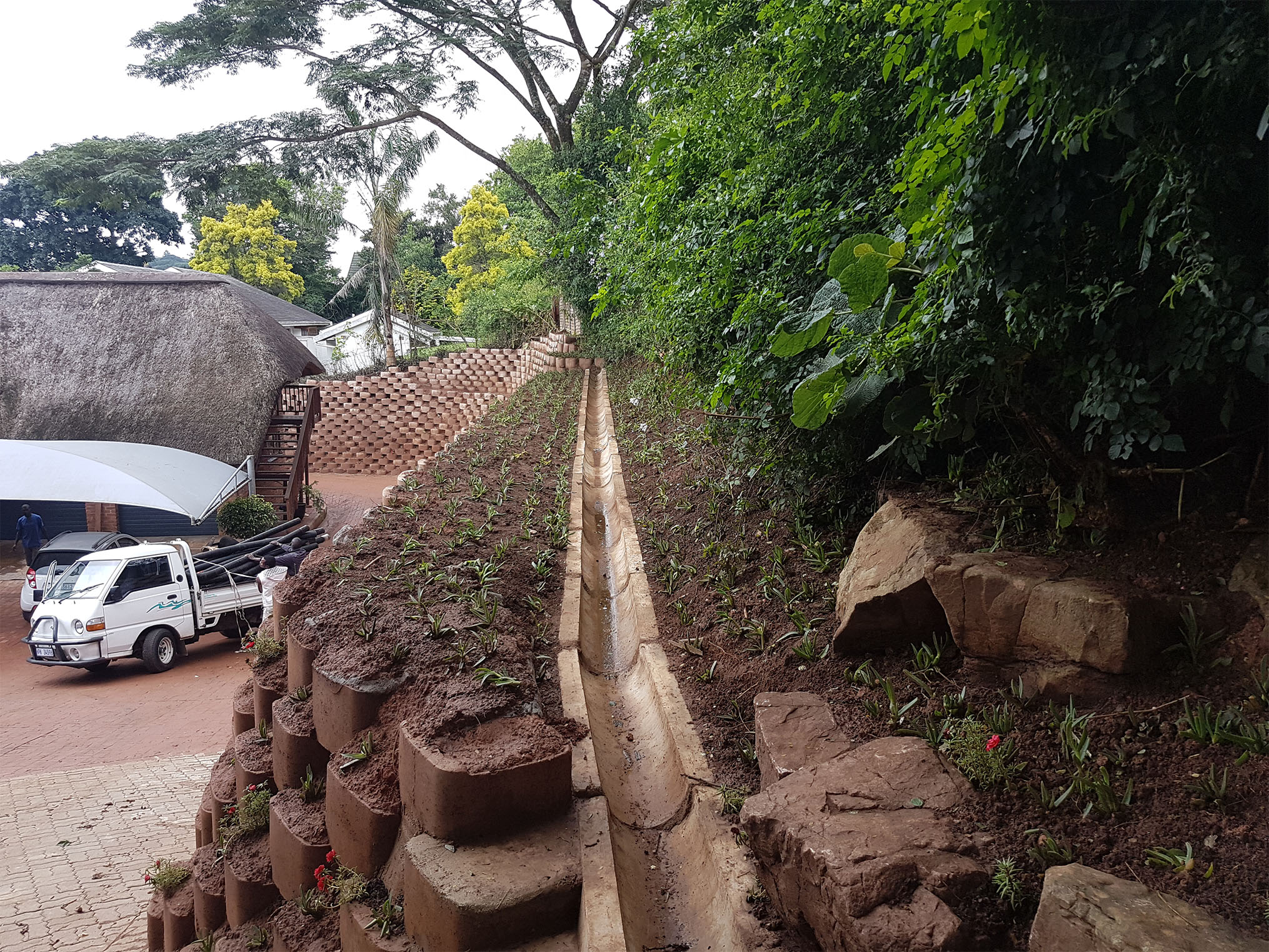
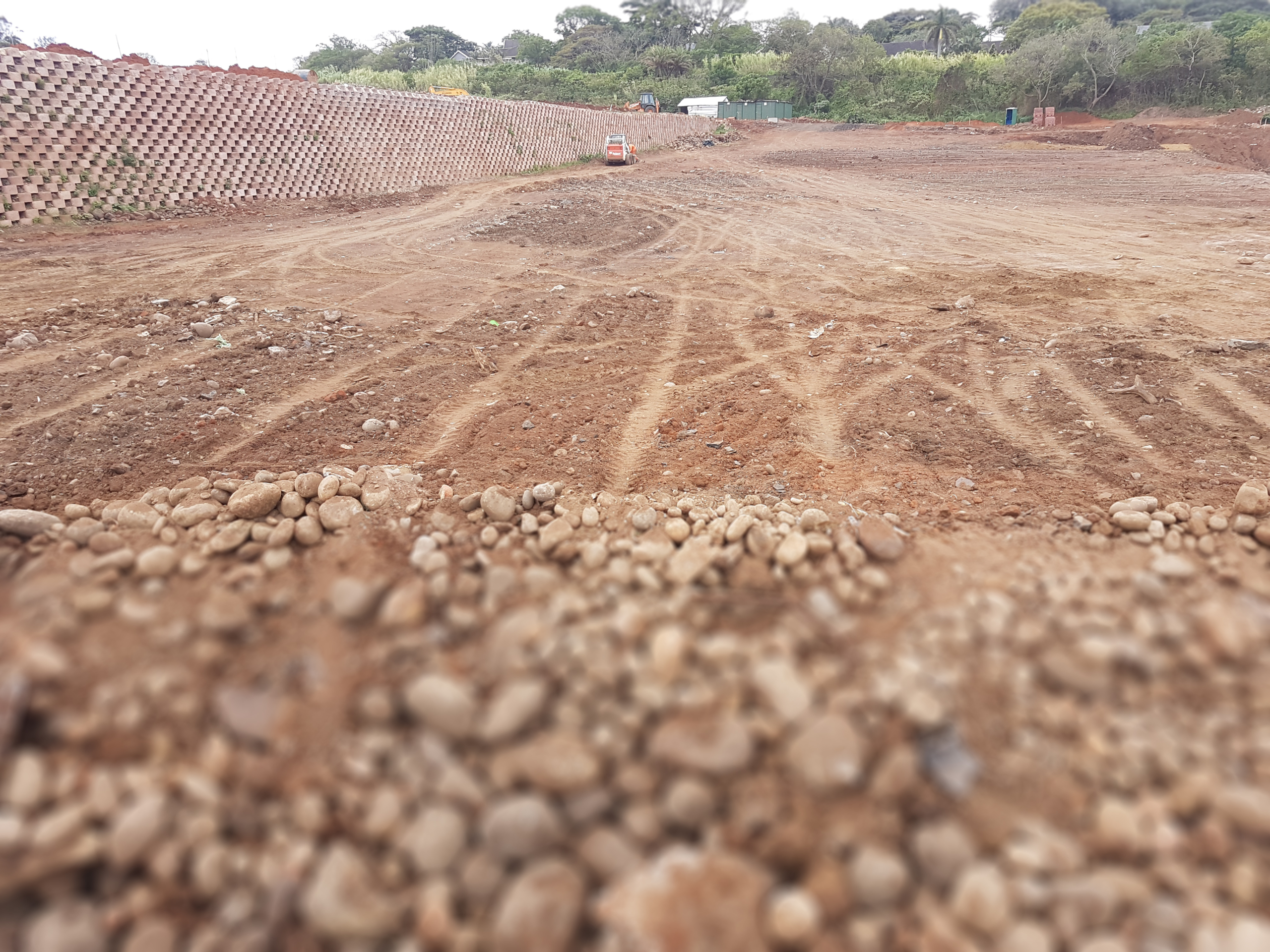
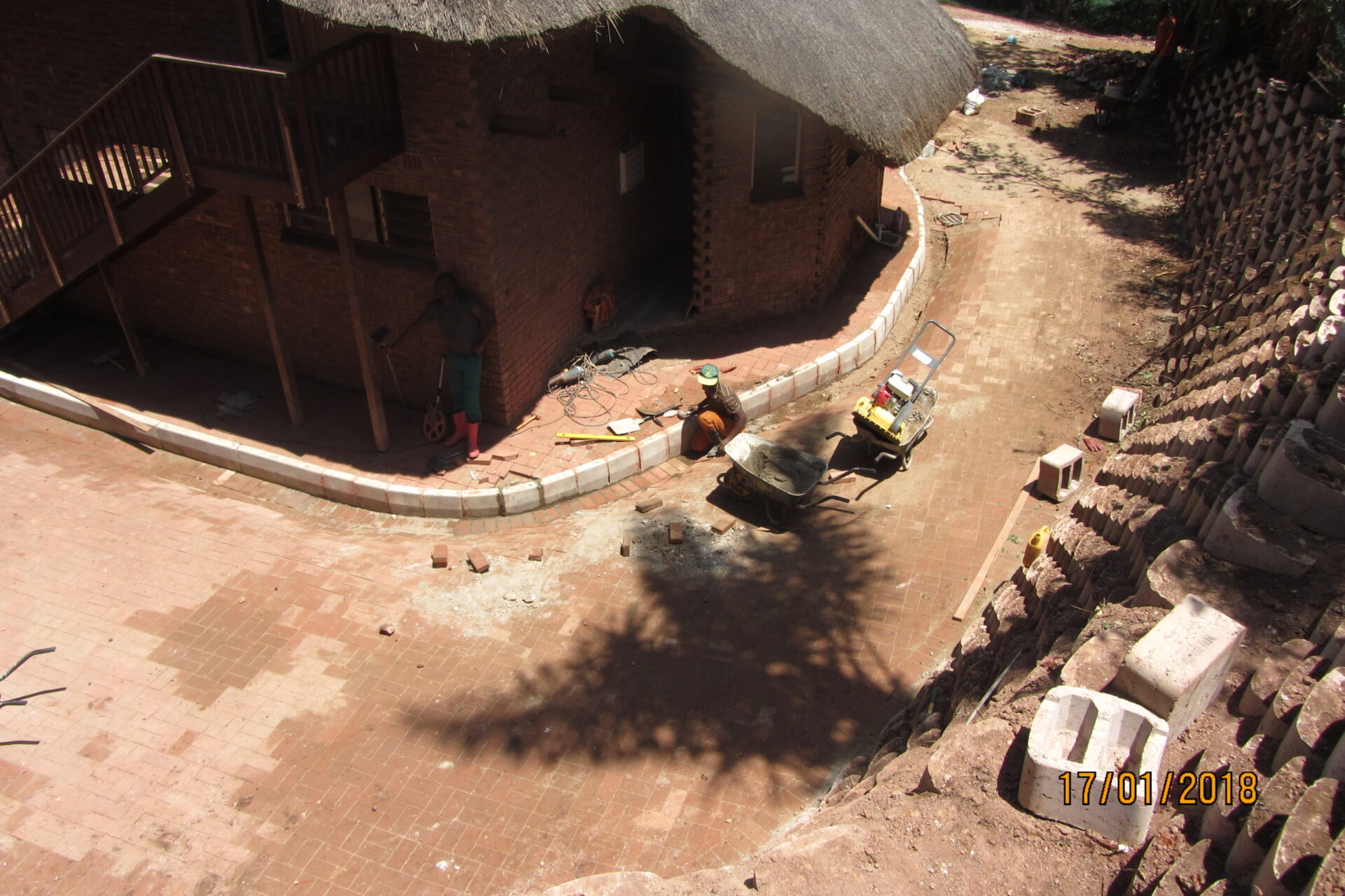
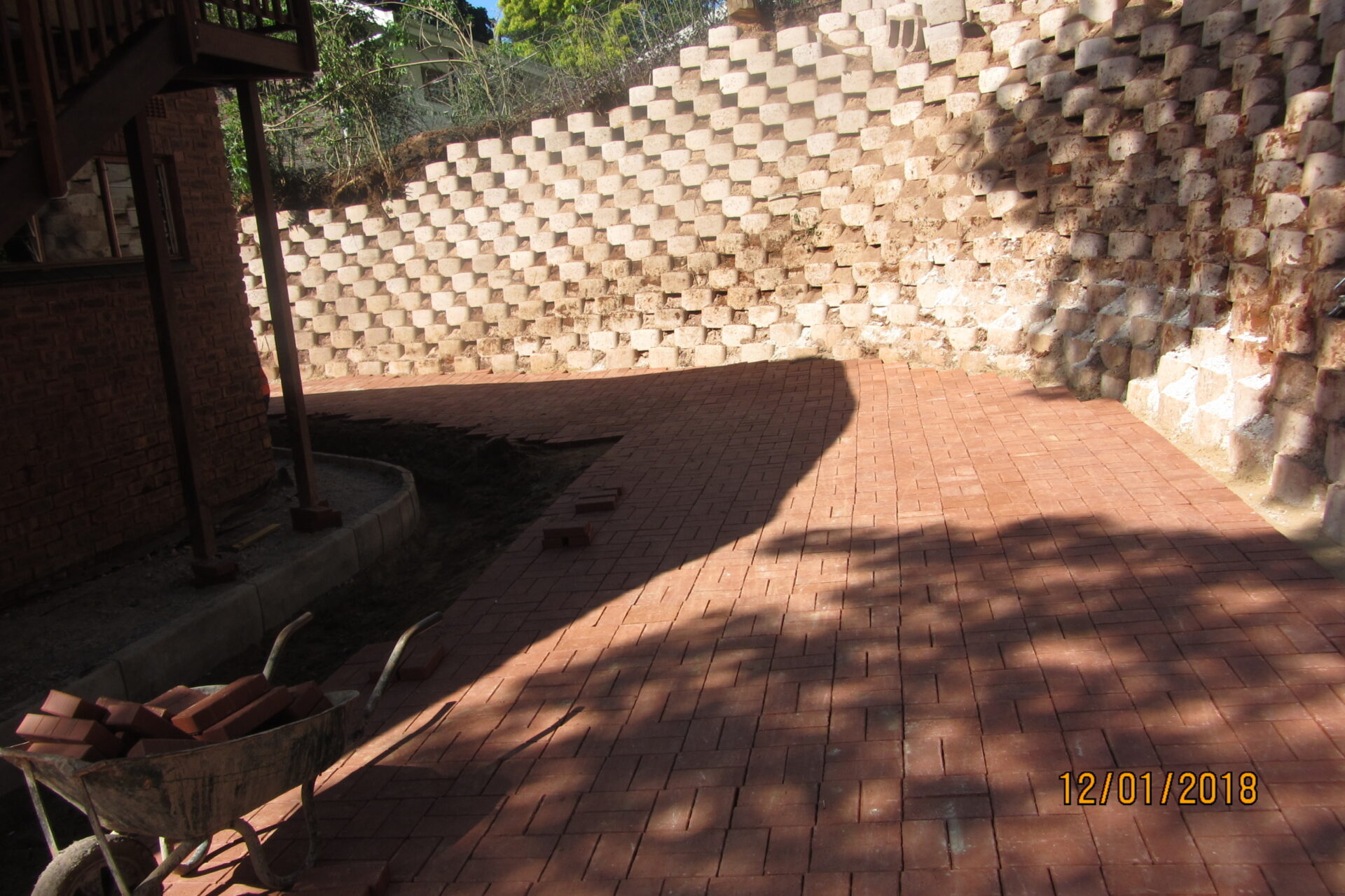
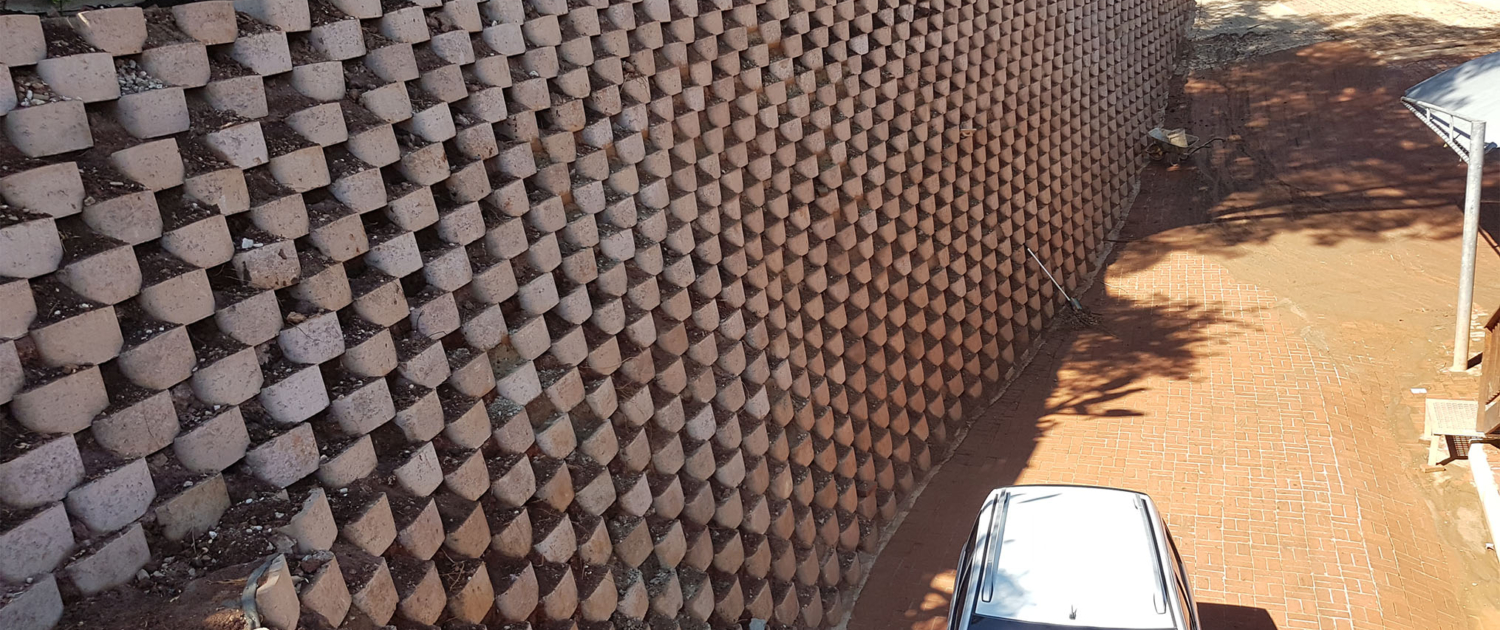
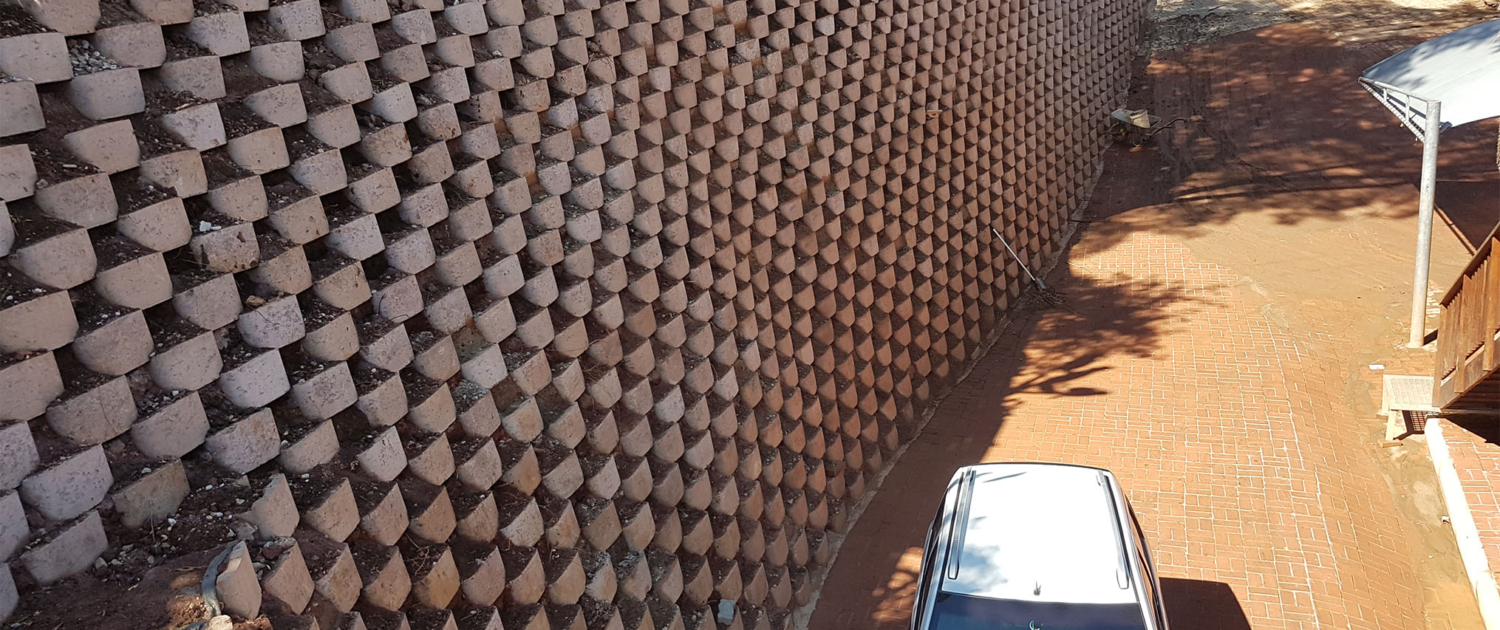
Geolock 400™ is a precast concrete retaining wall system aimed at the higher end of the retaining wall market because of its engineering capabilities and architectural aesthetics, with the appearance of sandstone and the structural properties that natural stone cannot apply.

Geolock400™ engineering capabilities are such that heights of between 0.6m to 9m can be achieved with a variety of engineering solutions for retaining walls from mass gravity used in conjunction with geosynthetic reinforcement, cement stabilization, geonailing, rock anchors or other soil stabilization methods. When compared with conventional retaining structures, such custom designed walls can contribute to dramatic savings in time and money

As a design build Geolock Retaining Wall contractor we bring to the table of negotiation a full spectrum of AUTO-CAD capabilities for exhibiting compliant commercial Standards Construction Details and Specifications, together with the in-field experience for what a 1st class installation exemplifies. Our turnkey commercial installations provide our clients a higher level of accountability with regards to designing and building a project to budget. One reason for this key difference is that we build what we design. In doing so we can commit to creating a design that has a real construction budget, one, designer, one contractor, one complete package of responsibility.

INTRODUCTION

The range of product and the finishes allow engineers and architects to specify the product on large and small projects. It also shows the versatility it has to meet individual project requirements. A comprehensive and complementary range includes stair treads and risers, and capping in several styles

  • Visible mechanical interlock in the form of a nib, which provides a high degree of shear resistance to block on block sliding.
  • Open face application requires less blocks per metre squared therefore it’s more cost competitive than closed face retaining block applications.
  • Nib ensures a maximum angle of inclination of 70 degrees.

When it comes to the construction of and regulations governing retaining walls, there are certain aspects that determine whether the structure follows the industrial-standard code, as stated by part K of SANS 10400.

FEATURES

GEOLOK

Blocks per m2 – (straight) 8
Mass per block: approx 38kg
Total mass of wall per m2
approx 700kg (inc. sand infill)
L=395 x W=375 x H=200mm

Loffelstein

General Information
Löffelstein™ (in-extensible) reinforced walls are high performance, mechanically stabilised earth retaining wall systems developed specifically for taller walls (highway walls), walls with heavy surcharges,

Löffelstein™ Reinforced Soil Walls
Used in conjunction with geosynthetic reinforcement, cement stabilization, geonailing, rock anchors or other soil stabilisation methods. When compared with conventional retaining structures, such custom designed walls can contribute to dramatic savings in time and money horizontal seismic loadings and impact loadings (vehicle crash barriers) are easily absorbed.

Löffelstein™ reinforced walls should be designed in accordance with as stated by part K of SANS 10400. Similar design failure modes are investigated to those carried out for geogrid reinforced walls.

Stability, strength and safety
Adaptability
  • Plant supportive and fully permeable (hollow core)
  • Can be made super strong in combination with reinforced concreted infill
  • Easy handling for remote site applications
  • No Special units and connectors needed
Appearance

RocEnviro-Wall Blocks

The RidgeBlokTM product is a large block, hollow core, wet-cast segmental retaining wall system. The environmental and economical advantages of RidgeBlokTM are unprecedented in the retaining wall industry. Because of its size and design flexibility, RidgeBlokTM is ideal for almost any retaining wall project from residential to large commercial installations.

These large blocks enable gravity walls to be built up to 2.6m high as a single skin, and 4.8m high as a double skin, making them ideal in boundary situations where crib-walls or gabions would generally benefit. As soil reinforced walls, the maximum height is limited to designers imagination (15-20m high).

The concept RidgeBlok system is a gravity retaining wall constructed of dry stacked interlocking, precast blocks. The simplicity of the design enables blocks to be easily and rapidly laid to form an effective retaining wall system. Typical applications include earth embankments, bridge abutments, cut slopes, landscaping of cut and fill areas around buildings, protection of steep channels and river banks and culvert inlets and outlets. The RidgeBlok also has the ability to reduce traffic noise when located adjacent to roadways.

The configuration of a RidgeBlok structure can be altered by opening or closing the spacing between the blocks. In the open arrangement, the cavities between the adjacent blocks can be filled with soil. Moisture in these spaces provide ideal conditions for rapid plant growth. The result is a visually appealing structurally stable retaining wall system.
The RidgeBlok block is also reversible. This allows the designer to use the smooth or textured face or a combination of the two. Many differing visual effects can therefore be achieved.

The RidgeBlok system is capable of supporting a wide range of embankment heights. For high and vertical walls a reinforced fill should be used. The geofabric layers can be effectively locked between the RidgeBlok blocks for additional stability. The angle of inclination of the wall may be set by the base block at 70˚. This can be varied should site conditions require other angles.
The wall is able to accommodate both concave or convex alignments, down to a relatively small radius of curvature. RidgeBlok structures will accommodate moderate ground settlement. Foundation requirements will vary according to wall height and underlying soil conditions.

General Information

A versatile, structurally sound and robust block.

RidgeBlok is versatile

  • The RidgeBlok is a dry stacked, concrete block system that can be aligned into tight, convex and concave curves.
  • The spacing between RidgeBlok can easily be narrowed to increase the unit weight of the wall and its effectiveness as a gravity structure. Alternatively, greater spacing between the blocks increases the plantable area for a more environmentally-friendly end product.
  • The open spaces can be increased to provide a more open and permeable facing to prevent excess build up of pore-water pressures behind the retaining wall.
Stability, strength and safety

RidgeBlok is structurally sound and robust

  • The solid concrete blocks are robust, resulting in fewer breakages during transport and construction activities.
  • The RidgeBlok  is a solid concrete block designed to dissipate stresses effectively once built into a retaining wall.
  • The deep-lip recess system (tongue and groove) provides a positive interlocking force to dissipate horizontal forces exerted on the interface between the blocks.
  • The compressive strength of the solid concrete RidgeBlok allows for construction of higher walls compared to hollow concrete retaining blocks.
Appearance

RidgeBlok is unique

  • The  RidgeBlok  facing is constructed at any angle between 70° and 90° to the horizontal without compromising any of its structural integrity. This character is seen as a major advantage over conventional, dry-stacked concrete blocks used in retaining-wall structures.
  • The architectural grooves on the one side of the RidgeBlok enable the blocks to be packed indifferent visually pleasing patterns
Design

RidgeBlok is intergrated

  • The deep-lip recess system, tongue and groove system, provides a positive clamping force between the RidgeBlok  and the facing geosynthetic reinforced backfill. This aspect is seen as a major advantage over the conventional concrete retaining block which relies solely on friction to prevent “pull-out” of the geosynthetic from the concrete block.

Block L22

The number after the L in the block name indicates the amount of blocks per square meter, so the L22 requires 22 blocks per square meter, while the L11 only requires 11.  A larger block will require less blocks, while a smaller block will allow you to turn tighter corners in your design.

The block itself is a hollow core, vertically interlocking concrete block for erosion control, landscaping, land reclamation and urban upgrading and infrastructure. The wide range of plantable retaining wall blocks is tailored to create environmentally friendly domestic or industrial installations and to support sustainable development in soil stabilisation. Walls can range from light gravity walls to geogrid reinforced earth-retaining or heavy gravity, double skin walls.

Design

Block L22 interlocking, mortarless and reversible, these blocks are light and easy to install, and provide a cost effective method of retaining. Block L11 blocks are versatile – creating curved walls and terraces, and being plantable, create a living wall! Walls can range from light or heavy gravity retaining walls ,to composite retaining walls, (using Geo-grid for reinforcement)

Wall inclination and curvature can be adapted as required, to suit a large range of site conditions, and blocks can be filled with soil, concrete or gravel, as required by the engineer.

Stability

Block 22’s vertical and horizontal hollow core, filled with clear crushed gravel, provides added weight, an excellent wall drainage system and a superb connection with the geosynthetic reinforcements.

Low
  • Plant supportive and fully permeable (hollow core)
  • Low transport cost – light weight hollow units
  • Can be made super strong in combination with reinforced concreted infill
  • Easy handling for remote site applications
  • No Special units and connectors needed
  • Low labour and material costs

TB500 & TB300

Terrace BlokTM TB 300/490 TB 300/490 walls are relatively flexible structures that are typically based on a compacted aggregate foundation. Components are manufactured from wet-cast concrete, resulting in a very durable retaining wall system. The blocks are resistant to cracking and do not splinter . The blocks contain no steel reinforcement  have no exposed wires to corrode.

Visible mechanical interlock in the form of a nib, providing a high degree of additional
shear resistance to block on block sliding.
• The open face application requires less blocks per m2
therefore is more cost competitive than closed face retaining block applications
• Nib ensures a maximum angle of inclination of 70º when laid horizontally

Mechanically Stabilised Retaining Wall

RE Panel walls (Reinforced Earth™) walls are a composite system of a face panel – generally concrete and a steel reinforcement element – either in the form of a steel strip or welded mesh, that is positively connected one to the other such that a stable unified gravity soil mass may be formed. The facing panel is generally a precast concrete unit that provides local soil stability and a “face” for compaction of the retained soil.

The panel may incorporate some special colour, texture or pattern to enhance the visual effect of the structure.

The steel reinforcing elements extend from the rear face of the concrete panel into the retained soil mass such that there is an effective increase in the shear capacity of the soil. The use of steel soil reinforcement elements allows the construction of retaining walls to very tall heights with the ability to withstand very large vertical and horizontal loads that are commonly associated with mining, bridge and highway structures. These specialist panel wall types are generally recognized as the single most appropriate technical solution to many specific retaining wall applications, where the tensile stresses generated within the structure are of such magnitude, that the use of alternate polymeric solutions such as a geogrid, becomes technically not feasible or uneconomical to use.

Construction

Dson Industries promotes these wall types as a very effective technical solution for the construction of heavily loaded retaining structures in the major infrastructure markets . Dson Industries is able to provide the specialist construction skills that are required for walls of this critical nature.

RE Panels are generally delivered to site direct from the manufacturers casting plant along with the custom designed steel reinforcement elements to ensure that the generally repetitive nature of erection of panels, connection of steel reinforcement elements and placement and compaction of backfill over the steel reinforcement elements can proceed quickly and cost effectively.

Durability

The use of materials such as concrete and steel that are used in this system of retaining wall type is well documented, researched and understood. For specific environmental concerns, specialty concrete mixes may be suggested in the manufacture of panels as well as special treatments for the steel reinforcement supplied.

It is important that surface water run-off and ground water movement is controlled over the life of the structure. Water that contains corrosive contaminants may have an adverse effect on both metallic and concrete components.

Design flexibility

RE Panel wall systems are able to accommodate curves, transitions and abrupt changes in direction easily. For walls of a temporary nature alternate facing systems such as mesh

may be incorporated rather than the concrete facing panel. Retaining Solutions should be contacted to provide advice on a suitable facing should the works be temporary in nature.

Aesthetics

RE Panel walls are available in a broad range of colours and textures. Local materials are used in the production of these precast panels and the exposed panel surface can be colored to compliment the natural surroundings.

Panel texturing may include raised relief, sandblast finish, exposed aggregate and conventional smooth faced concrete. The range of architectural treatments if required is only limited by the imagination of the client.

Performance

The design of these proprietary wall types is generally carried out by the manufacturer of the system. Generally the very critical application of these wall types will require a detailed analysis of foundation conditions, applied loadings, service life, soil properties and potential environmental issues, both long and short term that may be associated with the wall construction. Any changes to the size, shape and position of surcharge loads originally adopted for the wall design as a result of change of vehicle loadings, additional embankment height or structure loadings may compromise the wall design.

Commercial Industrial

Dson Industries , are an independent client side project manager, offering project planning and construction management in all market sectors. Our role as client representative, is to provide comprehensive management and coordination of all project activities. We work in cohesion with our clients to bring their projects to life.

Our primary job as Client’s Representative is to ensure that each member, of the client’s team conducts their responsibilities in a manner that serves the client’s overall interest. Acting as an extension of the client’s staff, we monitor and coordinate the efforts of all members of the Project Team to enable the client to achieve maximum quality and value.
The planning, execution and conclusion of each project are always handled carefully and thoroughly, to meet our clients’ expectations, objectives and deadlines

Geogrid Reinforced Soil Walls

General Information

Geogrid reinforced walls are gravity retaining walls with an expanded width (commonly known as “Reinforced Fill Zone”) created by the placement of geogrid behind a column of segmental facing units. The combination of segmental units and geosynthetic layers act together creating a coherent mass to resist the destabilizing forces generated by the retained soil and applied surcharge loadings.

The other main considerations of prime importance is drainage within and around the structures and most importantly that the walls are constructed the correct way, paying careful attention to compaction, placement and orientation of geogrids. Again Dson Industries has this expertise in-house.

Essentially geogrid reinforced walls, due to their relatively low material and installation costs typically save 25 to 50% compared with conventional concrete retaining walls when above 2m in height. Again such costs are project specific and project specific constraints may dictate the type of retaining solution adopted.

There are a variety of segmental block/geogrid combinations available in the marketplace. Each and every combination has unique connection strength & interface shear strength properties. These properties directly control the internal stability of geogrid reinforced segmental walls. Segmental block/geogrid combinations with poor connection strengths will inherently produce designs utilising more layers of geogrid (i.e reduced vertical spacing between layers).

The properties of the geogrid reinforcing elements play an important role in producing cost-effective designs. Commercially available geogrids are polyester (PET), high density polyethylene (HDPE), polypropylene (PP) or steel (strips, mesh panels or ladders, refer steel reinforced walls section). Refer photos below illustrating the types of geosynthetic geogrids and segmental block combinations Dson Industries  are familiar with both from design & construction.

Construction

Dson Industries promotes these wall types as a very effective technical solution for the construction of heavily loaded retaining structures in the major infrastructure markets . Dson Industries is able to provide the specialist construction skills that are required for walls of this critical nature.

RE Panels are generally delivered to site direct from the manufacturers casting plant along with the custom designed steel reinforcement elements to ensure that the generally repetitive nature of erection of panels, connection of steel reinforcement elements and placement and compaction of backfill over the steel reinforcement elements can proceed quickly and cost effectively.

Durability

The use of materials such as concrete and steel that are used in this system of retaining wall type is well documented, researched and understood. For specific environmental concerns, specialty concrete mixes may be suggested in the manufacture of panels as well as special treatments for the steel reinforcement supplied.

It is important that surface water run-off and ground water movement is controlled over the life of the structure. Water that contains corrosive contaminants may have an adverse effect on both metallic and concrete components.

Design flexibility

RE Panel wall systems are able to accommodate curves, transitions and abrupt changes in direction easily. For walls of a temporary nature alternate facing systems such as mesh

may be incorporated rather than the concrete facing panel. Retaining Solutions should be contacted to provide advice on a suitable facing should the works be temporary in nature.

Aesthetics

RE Panel walls are available in a broad range of colours and textures. Local materials are used in the production of these precast panels and the exposed panel surface can be colored to compliment the natural surroundings.

Panel texturing may include raised relief, sandblast finish, exposed aggregate and conventional smooth faced concrete. The range of architectural treatments if required is only limited by the imagination of the client.

Performance

The design of these proprietary wall types is generally carried out by the manufacturer of the system. Generally the very critical application of these wall types will require a detailed analysis of foundation conditions, applied loadings, service life, soil properties and potential environmental issues, both long and short term that may be associated with the wall construction. Any changes to the size, shape and position of surcharge loads originally adopted for the wall design as a result of change of vehicle loadings, additional embankment height or structure loadings may compromise the wall design.

Geosynthetics

Geosynthetics are meshes manufactured specifically for slope stabilisation and earth retention filtration, drainage, separation, reinforcement, protection, sealing and packing.

SOLUTIONS FOR DEVELOPERS

Solutions for developers

Our philosophy is only to design, certify and construct wall solutions that we know are competent and fit for purpose. On this we do not compromise. No short cuts are taken and no concession is made on quality, safety and performance.

Creating large level platforms for industrial estates typically require tall and reliable retaining structures. These wall structures are often required to support the foundations for heavy industrial buildings and associated equipment and storage, as well as heavy vehicle movements. These large, often highly visible walls, need also to aesthetically complement their surrounds, whilst being professionally engineered and utilising reliable quality products and a strong competent backfill. We have completed structures KCIP , Freight Logistics many other industrial clients.

Why us?

Integrity

From the company’s inception, integrity has been at the heart of the way we conduct business. We lead by communicating openly and are fully accountable for our actions.

Certified Experience

In providing our Project Management and Consulting Services in Durban and South Africa at large, we rely upon an archived understanding for having been there a thousand times before and we make each and every client the beneficiary of these time tested experiences.

Competitive Pricing

How we differ from others is measured not in a costs for the performance but, in the value in knowing you can delegate such responsibilities to someone that will get it done correctly…first time,…every time!

Familiarity with assembling the nuts and bolts…

It is our belief that in projecting our competence for our craft we must first gain your confidence and respect for what that difference can mean. The differences between us and other firms isn’t price, its passion driven familiarity!

Design Assist

Through formal or informal design assist relationships, we work together with owners, architects, engineers, and subcontractors from the early stages of pre-construction in order to brainstorm and research design options, review for construct-ability, and analyze cost implications.

Great Support

Thoroughly managing the construction process is vital to completing projects on time, under budget, and to the clients’ satisfaction. Dson Industries’ project management staff and field leadership collaborate to rigorously plan and regularly update each project’s costs and schedule, maintaining close control of the job and taking advantage of efficiencies wherever possible.

Dson Industries 2020