
Industrial Buildings and Warehouses
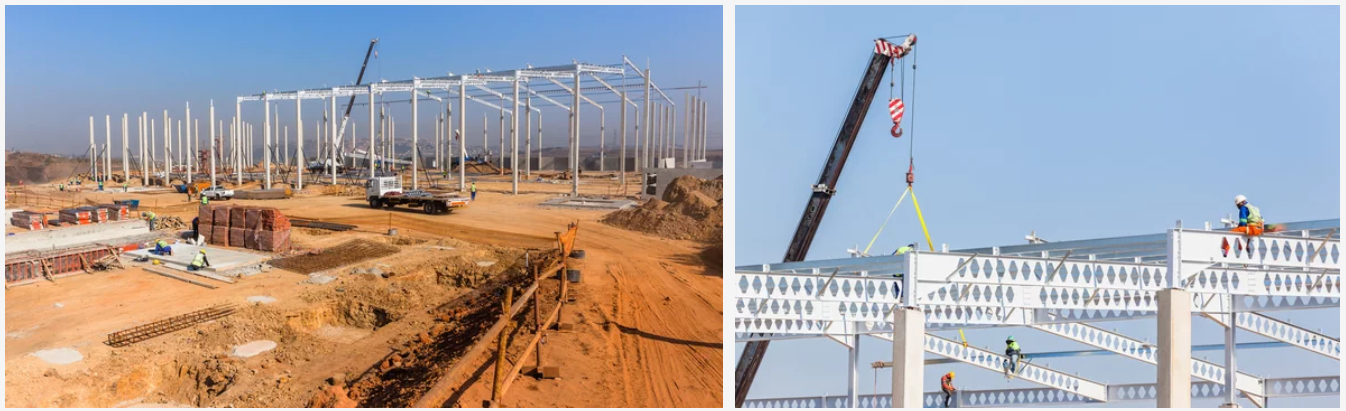
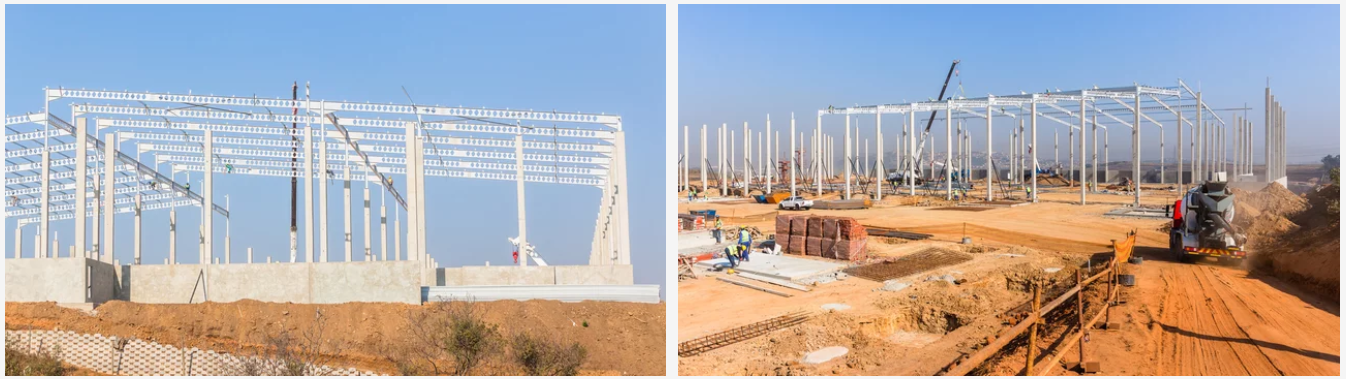
Industry Snapshot
Like all construction activity, this category of non-residential construction is crucially dependent on overall South Africa and regional economic health. Specifically, construction of industrial building and warehouses is intimately tied to trends and conditions in the South African manufacturing sector; individual projects are, moreover, bound to the economic health of whichever industries are sponsoring those projects.
Therefore, when the South African economic bubble of the late 1990s burst, spending on industrial buildings and warehouses began to wane. Employment in the manufacturing sector fell throughout 2001 and 2002, as did industrial production.
Organisation and Structure
In this sector of the construction industry general contractors generally bid for a project, assuming responsibility for the project’s planning and overall development. Often, however, the general contractor delegates performance of many specific tasks to specialty subcontractors.
Once a contractor is chosen to undertake a given project, he or she often remains in close communication with its owner over many aspects of construction detail while at the same time coordinating the work of various subcontractors and teams of employees. Given the inherent complexity of this arrangement, successful management proved one of the industry’s greatest challenges. Project often fail due to miscalculation of budgets and missed deadlines, often attributed to the lack of an efficient communication process between contractors and owners.
Background and Development
Contractors benefited from the booming South African economy in the late 1990s, in particular the raging stock market, which encouraged investment in new buildings and modernization schemes as manufacturing industries attempted to increase efficiency through technological innovation. Contractors were called in for building and remodeling projects to accommodate the new production methods and equipment.
Manufacturers that expanded or relocated in the mid and late 1990s at the greatest rate were those involved in semiconductor manufacturing, pharmaceuticals, food and kindred products, and paper and allied products. Companies within the pharmaceutical industry as well as semiconductor manufacturers are particularly in constant need of new research, development, and production facilities since their products face ever-shortening product life cycles. In order to be competitive, many manufacturers also need to upgrade into facilities fully equipped to provide advanced telecommunications and computer systems. Moreover, the importance increasingly attached by companies around the world to reducing hazards to the environment was expected to create further remodeling and new construction opportunities.
The food industry, for instance, demanded the construction, expansion, or renovation of a record 867 plants in 1998, an increase of 14.7 percent from the year before. Analysts attributed the bulk of this growth to increasing automation in production. The food industry in general was leaning toward larger facilities in which automation could be most economically applied.
Also impacting the industry in the 1990s was the increasingly stringent loan requirements set up by banks in the wake of the savings and loan crisis. To counter banks taking a risk position in these projects, developers and their subsequent construction firms were often asked to take an equity position or become a part owner in projects they design or build. Meanwhile, however, the growing strength and popularity of real estate investment trusts (REITs) helped maintain healthy funding for construction in this sector, even in the face of concerns over oversupply or pending interest-rate increases.
The nonresidential repair and renovation market, in general, was seen as having a more secure future than that of new construction. The commercial building boom of the 1980s produced, among other results, record vacancy rates for warehouses, and this over-supply was expected to diminish the market for new warehouse construction for some time. Instead, manufacturers were generally trying to reflect their industries’ tightening concentration by expanding their capacities—in short, fewer but larger facilities.
Contractors in this construction sector remained somewhat wary, however, over the increased international presence of the South African manufacturing industries. With relaxed trade and investment restrictions, a strong dollar relative to foreign currencies, and the lure of cheaper labor and materials costs overseas, larger firms with capacity to move production facilities to foreign markets began seeing increasing reasons to do so. However, such practices were also expected to lead to a rise in warehouse construction, as goods produced abroad would be shipped to the S.A and readied for domestic distribution.
Workforce
About 5 percent of South African labor force is employed by one branch or another of the construction industry. The industrial building and warehouse sector employed about 139,000 individuals at the turn of the twenty-first century. Construction workers in this category earned an average of R103/per hour. The states employing the greatest number of construction workers were Gauteng , Western Cape and KwaZulu Natal
Despite its size, this workforce was by no means monolithic. Employment in construction was seasonal, leading to pronounced swings in the number of workers employed over the course of a year. Moreover, the skilled members of the workforce engaged in a wide variety of different crafts or specialties. As a result, no single voice could adequately represent the various needs and interests of all of these workers. Such considerations were particularly important because labor and management are more intimately tied than in many other industries. That is, in addition to wages and working conditions, unions must negotiate with contractors on issues such as training procedures and hiring practices. Especially in the late 1990s, when skilled labor was in exceptionally short supply, employers and unions were increasingly forced to negotiate to preserve job opportunities.
Further adding to the lack of uniformity in the workforce were the tendencies for skilled workers to identify with their specialties rather than with a particular employer, as well as for all employees to change employers often, to switch frequently from site to site, to work beside teams hired by other employers, and to engage to an unusual extent in self-supervision.
Supervising contractors typically worked their way into that position from a beginning in some particular craft or specialty. Traditionally, academic training has played a minor role in preparing contractors for their career, though the inherent complexity of managing construction projects—especially the larger ones—seemed likely to make higher levels of education increasingly desirable.
Covers general contractors primarily engaged in the construction,
- alteration,
- remodeling, r
- epair, and renovation of industrial buildings and warehouses,
- including aluminum plants,
- automobile assembly plants,
- food processing plants,
- pharmaceutical manufacturing plants, and commercial warehouses.


